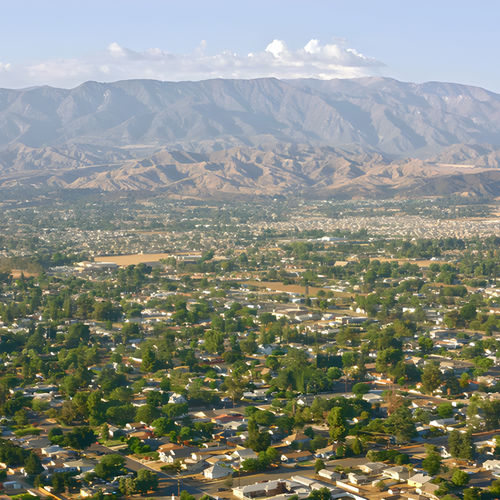

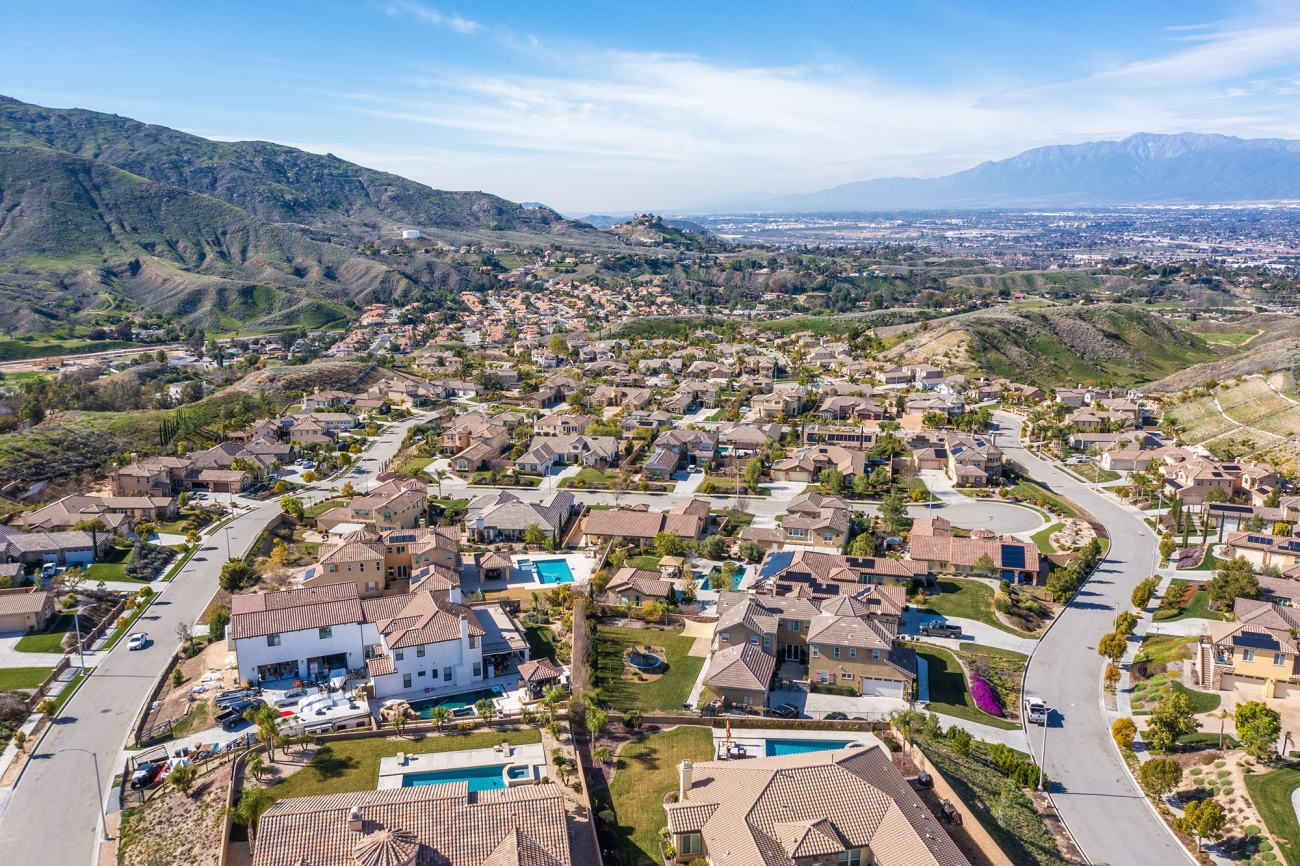
If you are thinking about moving to Colton, California, the first thing I would tell you is this.
Do not judge Colton from the freeway.
A lot of people in the Inland Empire know Colton primarily as the place where Interstate 10 and Interstate 215 meet. They drive through it on the way to Riverside, San Bernardino, Redlands or Loma Linda without ever exploring the residential areas beyond the freeway.
That misses a big part of the city.
Colton has historic neighborhoods, established single family homes, newer residential pockets, the Cooley Ranch area, South Colton, neighborhoods near Arrowhead Regional Medical Center and homes extending toward Reche Canyon and the hills bordering Grand Terrace and Loma Linda.
It is also one of the most centrally positioned cities in this part of the Inland Empire.
You are close to Loma Linda.
You are close to Redlands.
You have direct freeway access toward Riverside and San Bernardino.
And for buyers working in healthcare, logistics, education or one of the surrounding employment centers, that location can be a major reason to consider living here.
So if you are considering living in Colton, CA, here is what you should know about the homes, neighborhoods, commuting and lifestyle before making a move.
Where Is Colton, California?
Colton is located in San Bernardino County in Southern California's Inland Empire.
Interstate 10 runs east and west through the city while Interstate 215 provides a major north and south connection.
Those two freeways intersect in Colton.
That crossroads location has been part of Colton's identity for much longer than the modern freeway system.
The city developed around the railroad, and major east and west and north and south rail lines crossed in Colton. Later, construction of Interstate 10 and Interstate 215 reinforced the city's role as a transportation crossroads.
For today's home buyer, that geography can be one of Colton's biggest advantages.
Depending on where you live and work, you can have relatively direct access toward Loma Linda, Redlands, San Bernardino, Riverside, Grand Terrace and other Inland Empire communities.
But location is only part of the story.
The different parts of Colton can feel surprisingly different from one another.
What Is Colton, California Known For?
Colton has deep railroad roots.
The development of the community accelerated when the Southern Pacific Railway reached the area in the 1870s and established a depot.
Railroad workers and executives settled nearby, businesses followed and Colton developed into an important regional rail center.
The city was named for David Colton, a former Civil War general and Southern Pacific Railroad executive.
That history still matters today.
Rail lines remain a major physical presence in Colton, and industrial development continues to be an important part of the city's landscape.
But modern Colton is not simply an industrial or transportation city.
It is also a residential community with neighborhoods that developed across very different periods.
That creates more housing variety than someone passing through on Interstate 10 might expect.
What Types of Homes Can You Find in Colton?
Colton has a mix of housing that reflects more than a century of development.
Depending on current inventory, buyers may find older homes near the historic core, traditional postwar houses, established suburban neighborhoods, condos and townhomes, homes in Cooley Ranch and residential properties farther south toward Reche Canyon.
That variety can make Colton interesting for buyers who care more about finding the right property than living in a city dominated by one particular housing style.
Older and Historic Homes
Some of Colton's oldest residential areas developed alongside the railroad and early commercial center.
The city still has buildings and neighborhoods reflecting that history.
Established Single Family Homes
A significant portion of Colton consists of established residential neighborhoods developed throughout the twentieth century.
These homes can vary substantially in size, lot configuration, condition and architectural style.
Cooley Ranch Homes
Cooley Ranch offers a more suburban residential environment in southern Colton and is one of the city's most recognizable housing areas.
We will cover Cooley Ranch separately in its own dedicated guide because it deserves much more attention than a few paragraphs here.
Condos and Townhomes
Attached housing can also be found within Colton, providing alternatives for buyers who may prioritize price, location or lower exterior maintenance.
Hillside and Reche Canyon Area Homes
As you move toward the southern and southeastern portions of Colton, the terrain changes.
This part of the city begins to feel very different from the flatter areas around Interstate 10.
That geographic variety is one reason buyers should explore Colton in person.
Cooley Ranch
If you start searching for homes in Colton, there is a good chance you will encounter the name Cooley Ranch.
The name has deep local roots.
George Cooley purchased land in what is now Colton in the 1850s and continued adding to his property until the ranch grew to more than 400 acres. The arrival of the Southern Pacific Railway at Cooley Ranch in 1875 played an important role in the development of what became Colton.
The modern Cooley Ranch area sits in southern Colton near Interstate 215 and the Santa Ana River.
The city historically established a specific planning and redevelopment area for Cooley Ranch covering approximately 436 acres.
Today, buyers may know Cooley Ranch primarily for its residential neighborhoods, nearby commercial development and convenient access to surrounding cities.
For someone who only knows central Colton, driving through Cooley Ranch can change their perception of the city.
It feels distinctly suburban.
And because of its location, it creates an interesting option for buyers comparing Colton with Grand Terrace, Loma Linda and Riverside.
Why Cooley Ranch Deserves Its Own Guide
I would not make a decision about Colton without exploring Cooley Ranch.
But I also would not assume Cooley Ranch represents all of Colton.
That distinction matters.
One of the mistakes buyers make when researching a city online is finding one neighborhood and assuming the entire city offers the same environment.
Colton does not.
Cooley Ranch is one piece of a much larger housing market.
We will cover its homes, location, shopping, freeway access and surrounding communities in a dedicated Cooley Ranch guide.
Reche Canyon
Reche Canyon is another important geographic name to understand when looking at southern Colton.
The Reche Canyon area extends through hilly terrain between Colton and Moreno Valley, with nearby residential areas also connecting toward Grand Terrace.
The City of Colton maintains a dedicated Reche Canyon Specific Plan, which reflects how distinct this area is from other parts of the city.
The environment can feel noticeably more rural and open than central Colton.
You have hills, winding roads and less of the traditional flat suburban grid.
For buyers attracted to that environment, it can be worth exploring.
But there are practical considerations too.
Traffic through Reche Canyon has been significant enough that the city has held dedicated Reche Canyon traffic meetings and planning discussions.
If you are considering a property in or near the canyon, drive the route during the hours you would actually use it.
Do not evaluate it only on a quiet weekend afternoon.
South Colton
South Colton is one of the historically significant parts of the city.
As railroad and industrial activity expanded, many railroad workers lived in South Colton and built homes near their jobs.
The city notes that some early residents even used wooden railroad shipping crates as building material for their homes.
That history gives South Colton a very different development story from newer suburban neighborhoods.
Today, the city has a South Colton Livable Corridor Plan as part of its broader planning framework.
For a home buyer, the practical takeaway is simple.
Colton has neighborhoods that developed for very different reasons at very different times.
You should evaluate the specific street and property rather than relying solely on a citywide impression.
Living Near Arrowhead Regional Medical Center
Healthcare is a major employment factor in this part of the Inland Empire.
Arrowhead Regional Medical Center is located on the western side of Colton.
That can make Colton particularly relevant for medical professionals and other employees who want to live close to work.
And Arrowhead is not the only major medical institution nearby.
Loma Linda University Medical Center and the broader Loma Linda University Health campus are also located just east of Colton in neighboring Loma Linda.
That creates an interesting housing search corridor for healthcare workers.
If you are relocating for a medical job, I would not automatically search only within the city where your hospital is located.
Compare the surrounding communities.
Your best housing option may be one city over.
Colton and Loma Linda
Colton and Loma Linda directly border one another.
In fact, the City of Colton's current land use map shows Loma Linda immediately east of southern Colton near Washington Avenue and the Cooley Ranch area.
That proximity matters.
Someone working at Loma Linda University Medical Center may find a Colton home that fits their budget or property preferences better than what is available within Loma Linda itself.
The two cities offer different environments.
Loma Linda's identity is heavily influenced by the university, medical center and healthcare community.
Colton is larger geographically and has a broader mix of residential, commercial, transportation and industrial areas.
If you are relocating to work in Loma Linda, I would consider both.
Colton vs Grand Terrace
This is another comparison that makes a lot of sense.
Grand Terrace sits immediately south of Colton and is considerably smaller.
Colton offers more geographic and housing variety, while Grand Terrace has a smaller city environment.
Cooley Ranch is particularly relevant to this comparison because it sits in southern Colton close to Grand Terrace.
Someone searching Grand Terrace may find that a property just across the city boundary in Colton offers the features they want.
And someone searching Colton may discover they prefer Grand Terrace.
This is exactly why I prefer searching by lifestyle, commute and property requirements rather than becoming overly attached to a city name before seeing the homes.
Colton vs Redlands
Redlands and Colton offer very different city experiences.
Redlands has a recognizable historic downtown, the University of Redlands, historic residential districts and a strong architectural identity.
Colton's strengths are different.
Its central location, freeway access and proximity to major employment centers can make it attractive to buyers focused on practicality and connectivity.
Depending on the property and current market, buyers may also find different housing opportunities at the same budget.
If you love the Redlands lifestyle but are struggling to find the right property, expanding the search west into Colton may be worth considering.
Colton vs Riverside
Colton also sits directly within the broader Riverside and San Bernardino corridor.
Interstate 215 provides a relatively direct connection south toward Riverside.
For buyers working in Riverside but searching farther north, parts of Colton can enter the conversation.
The reverse is also true.
Someone considering Colton may want to compare what their budget buys in Riverside, Grand Terrace and nearby communities.
Again, test the commute.
A city can look close on a map while traffic tells a very different story.
Why Location Is One of Colton's Biggest Advantages
If I had to identify one of Colton's strongest real estate advantages, location would be near the top of the list.
Interstate 10 gives you east and west access.
Interstate 215 gives you north and south access.
Redlands and Loma Linda are nearby.
San Bernardino is nearby.
Grand Terrace is immediately south.
Riverside is accessible through the 215 corridor.
For households where two people commute in different directions, that central positioning can become particularly valuable.
One person may work in Loma Linda.
Another may work in Riverside.
A centrally located home can sometimes make more sense than choosing the city closest to only one workplace.
Commuting From Colton
Colton's freeway access is convenient geographically.
That does not mean the freeways are always convenient in practice.
Interstate 10 and Interstate 215 are major regional transportation corridors.
Traffic can change significantly depending on the time of day.
Rail activity is another part of Colton's transportation landscape, and city planning documents acknowledge that rail lines can create local circulation and noise concerns in some areas.
That is why I recommend testing the commute from the actual property.
Not from Colton generally.
Not from a map.
From the house.
Drive to work during the time you would normally leave.
Then drive home during your normal return commute.
That gives you information a listing description cannot.
Railroad Considerations When Buying in Colton
Because railroads played such an important role in Colton's development, rail lines remain part of the modern city.
That can matter when buying a home.
If a property is near active rail infrastructure, visit at different times.
Listen.
Pay attention to crossings.
Consider how trains affect your normal driving routes.
The City of Colton's planning documents specifically identify train noise and local circulation around rail lines as community considerations.
This does not mean you should avoid every home near a railroad.
It means you should know what you are buying.
Shopping and Everyday Amenities
Colton has shopping, restaurants and everyday services throughout the city, particularly around major commercial corridors and freeway access points.
The Cooley Ranch area also includes significant commercial development.
But Colton's central location means residents are not limited to what sits inside the city boundary.
Redlands, Loma Linda, San Bernardino, Grand Terrace and Riverside are all part of the broader regional environment.
That matters because most Inland Empire residents do not organize their lives according to municipal borders.
You may live in Colton, work in Loma Linda, eat dinner in Redlands and shop in Riverside.
That is normal here.
Downtown Colton
Colton has an established downtown with historic roots tied to the city's early railroad development.
The city continues to plan around its central area through the Hub City Centre Specific Plan, which was updated in 2025.
That is worth watching over time.
Downtown Colton is not Downtown Redlands, and buyers should not expect the same environment.
But the city has a historic core and ongoing planning efforts aimed at how that area develops.
For someone interested in older communities and future investment in established city centers, that is worth knowing.
Parks and Recreation in Colton
Colton has parks and recreational facilities distributed throughout the community.
Your experience will depend on the neighborhood.
This is another area where I would evaluate the property specifically.
How close is the nearest park?
Can you walk there?
Is there a trail nearby?
Where would you actually exercise, walk the dog or take the kids?
For some buyers, a nearby park may matter more than an upgraded kitchen.
Those lifestyle details are easy to overlook when you are focused on listing photos.
The Santa Ana River and Colton
The Santa Ana River is another major geographic feature shaping Colton.
It runs along portions of the city and helps define the western side of the historic Cooley Ranch area.
The river corridor, rail lines, freeways and surrounding hills all help explain why Colton's neighborhoods developed where they did.
That geographic context is useful when you are trying to understand the city rather than simply looking at individual listings.
Is Colton Walkable?
That depends heavily on the neighborhood.
Colton is not one uniformly walkable environment.
Someone living near the historic central area may have a different experience from someone in Cooley Ranch or farther toward Reche Canyon.
If walkability matters to you, evaluate it from the actual property.
Open the map.
Then go there.
Walk around.
See whether the destinations you care about are realistically accessible on foot.
A walkability score cannot tell you whether you personally enjoy walking that route.
What Is the Weather Like in Colton?
Colton has the hot, dry summer climate typical of the Inland Empire.
Summers can get very warm.
Winters are generally mild compared with much of the country.
For buyers moving inland from coastal Southern California, the summer heat is something to consider seriously.
Look at the HVAC system.
Look at windows.
Consider insulation.
Notice which direction the house faces.
Look at shade and landscaping.
If the property has solar, understand whether the system is owned, financed, leased or subject to another agreement.
Comfort and energy costs matter when you live inland.
Property Taxes in Colton
California property taxes begin with the general framework established by Proposition 13, but an individual property's tax bill can include additional voter approved debt and assessments.
Do not assume two Colton homes at the same price will have identical tax bills.
Review the actual property information before purchasing.
This becomes particularly important when comparing homes across city boundaries.
A buyer may be looking simultaneously in Colton, Grand Terrace, Loma Linda and Redlands.
Purchase price is only one component of the monthly cost.
Homeowners Insurance in Colton
Homeowners insurance should be investigated for the specific property you are considering.
Rates and availability can depend on location, construction, property condition and insurer requirements.
If you are considering a property closer to hills or open terrain, investigate insurance early rather than waiting until the end of escrow.
The same principle applies throughout the Inland Empire.
Get an address specific quote.
Do not rely on what someone else pays for a different property.
Older Homes in Colton
Because Colton has a long history, buyers may encounter homes that have been standing for many decades.
Older does not automatically mean bad.
In fact, an older home may offer a lot size, architecture or location that is difficult to reproduce in newer construction.
But older properties deserve careful evaluation.
Depending on the home, buyers may want to pay particular attention to the electrical system, plumbing, sewer, roof, foundation, HVAC, windows, additions and previous renovations.
Permits can also matter when a property has been modified over the years.
The goal is to understand what has been updated and what may need attention after you purchase.
Newer Housing in Colton
Colton is not exclusively an older housing market.
Residential growth after World War II and later Inland Empire subdivision development created many newer neighborhoods compared with the city's original core.
Additional residential planning continues today.
The city's current Housing Element covers the 2021 through 2029 planning period and includes policies intended to accommodate additional housing development.
For buyers, this means there can be opportunities beyond the older neighborhoods most associated with Colton's history.
What Should Buyers Know About Industrial Areas?
This is another topic worth discussing openly.
Industrial and transportation uses are significant parts of Colton.
City planning documents identify industrial activity along rail lines and south of Interstate 10, where businesses benefit from rail and freeway access.
That makes the exact location of a home important.
When touring a property, look beyond the immediate street.
What is behind the neighborhood?
What is across the main road?
Where are the truck routes?
Where are the rail lines?
What land uses surround the property?
These are good questions anywhere.
They are particularly useful in a city where residential, transportation and industrial development have existed alongside one another for generations.
Is Colton a Good Option for Healthcare Workers?
It can be.
Arrowhead Regional Medical Center is located in Colton, and Loma Linda's major medical campus is nearby.
That makes Colton worth considering for healthcare professionals relocating to this part of the Inland Empire.
But I would not choose a neighborhood based solely on the hospital name.
Look at your shift.
Look at your commute.
Look at the type of home you want.
Compare Colton with Loma Linda, Grand Terrace, Redlands and other nearby communities.
If you work twelve hour shifts, shaving time from your commute may matter more than another buyer realizes.
Things I Like About Colton
Location is the obvious one.
Colton sits at a major Inland Empire crossroads.
Housing variety is another.
The city does not force every buyer into the same type of neighborhood.
You can explore older homes.
You can look at established suburban areas.
You can consider Cooley Ranch.
You can head toward Reche Canyon.
You can stay close to major medical employment.
And because Colton borders or sits close to several very different communities, you can compare a lot of housing options without expanding your search very far geographically.
Things to Consider Before Moving to Colton
Colton's transportation advantages also create some of its tradeoffs.
Freeways are convenient, but some properties will experience more freeway influence than others.
Railroads are historically important, but proximity to active rail lines may matter to certain buyers.
Industrial development provides jobs and economic activity, but you should understand surrounding land uses before buying.
And the experience of living in Cooley Ranch can be very different from living in an older neighborhood near central Colton or closer to Reche Canyon.
That is why I would never answer the question "Is Colton a good place to live?" with a simple yes or no.
The better question is:
Which part of Colton fits what you are looking for?
Frequently Asked Questions About Living in Colton, CA
Is Colton, California a Good Place to Live?
Colton can be a good fit for buyers who prioritize central Inland Empire access, proximity to major employment centers and a variety of housing options.
The right fit depends on the specific neighborhood, property, commute and lifestyle you want.
Where Is Colton, California?
Colton is located in San Bernardino County in Southern California's Inland Empire.
Interstate 10 and Interstate 215 intersect within the city, giving Colton direct regional access in multiple directions.
Is Colton Close to Loma Linda?
Yes.
Colton directly borders Loma Linda.
Southern Colton, including the broader Cooley Ranch area, is particularly close to Loma Linda.
Is Colton Close to Redlands?
Yes.
Redlands is east of Colton beyond Loma Linda and is easily accessible through the Interstate 10 corridor.
Buyers considering one city may benefit from comparing housing options in the other.
What Is Cooley Ranch in Colton?
Cooley Ranch is an area of southern Colton with residential and commercial development near Interstate 215 and the Santa Ana River.
The name also has historic significance because George Cooley developed a ranch in the area during the nineteenth century, and the arrival of the Southern Pacific Railway at Cooley Ranch helped drive the early development of Colton.
Is Cooley Ranch a Separate City?
No.
Cooley Ranch is part of Colton, California.
It is one of the city's better known residential areas and sits in southern Colton near Grand Terrace and Loma Linda.
What Is Reche Canyon?
Reche Canyon is a hilly corridor extending south from the Colton area toward Moreno Valley.
The City of Colton maintains a dedicated Reche Canyon Specific Plan for development within its portion of the area.
Is Colton Near Riverside?
Yes.
Interstate 215 provides a direct regional connection between the Colton area and Riverside.
Actual drive times depend on traffic and the specific starting and ending locations.
Does Colton Have Older Homes?
Yes.
Colton has residential areas dating back to the city's early railroad history as well as homes built throughout later periods of twentieth century development.
Does Colton Have Newer Homes?
Yes.
Although Colton has historic neighborhoods, later subdivision growth created newer residential areas as well.
Housing opportunities vary significantly by location within the city.
Is Colton Good for Loma Linda University Medical Center Employees?
Colton can be worth considering because it directly borders Loma Linda and provides access to the medical center area.
The actual commute depends on the property location, work location and time of day.
What Should I Check Before Buying a Home in Colton?
Look at the condition of the property, taxes, insurance, surrounding land uses, freeway proximity, rail proximity, commute, neighborhood environment and any applicable HOA information.
For older homes, pay particular attention to major systems and previous modifications.
Should You Move to Colton, California?
If you are considering Colton, I would spend a day exploring the city rather than driving through it.
Start around the central part of Colton.
Look at the established neighborhoods.
See the historic core.
Then head south.
Drive through Cooley Ranch.
Continue toward Grand Terrace.
Explore the areas leading toward Reche Canyon.
Then drive east into Loma Linda.
If you are considering Redlands, continue a little farther.
You will quickly understand why looking at these cities together makes more sense than researching them in isolation.
Colton's biggest strength may not be one famous neighborhood or landmark.
It is the combination of location and housing variety.
You are positioned near some of the eastern Inland Empire's largest employment centers.
You have access to two major freeways.
You are close to major healthcare institutions.
And you have several surrounding cities offering completely different lifestyles within a relatively compact geographic area.
For the right buyer, that can make Colton a very practical place to begin a home search.
But the specific neighborhood matters.
The street matters.
The commute matters.
The surrounding land uses matter.
And the property itself matters.
That is why local knowledge becomes valuable.
If you are considering buying or selling a home in Colton, I would be happy to help you compare Colton, Cooley Ranch, Grand Terrace, Loma Linda, Redlands and surrounding communities so you can understand what your budget buys and which location makes the most sense for your move.
Nick Ondatje | REALTOR®
Mainstreet Realtors
CA DRE 01401990
909-437-0132
Check out this article next