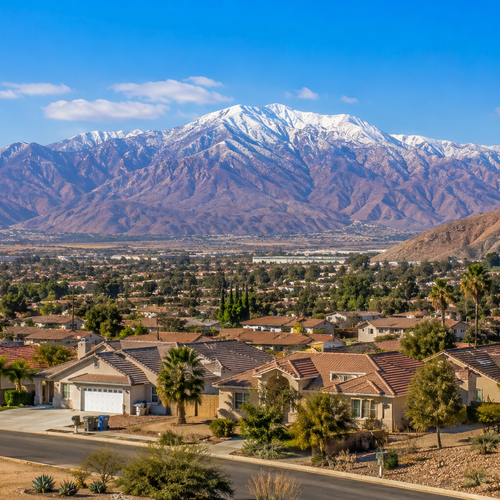

Reche Canyon is one of those places that can surprise buyers who think they already understand this part of the Inland Empire.
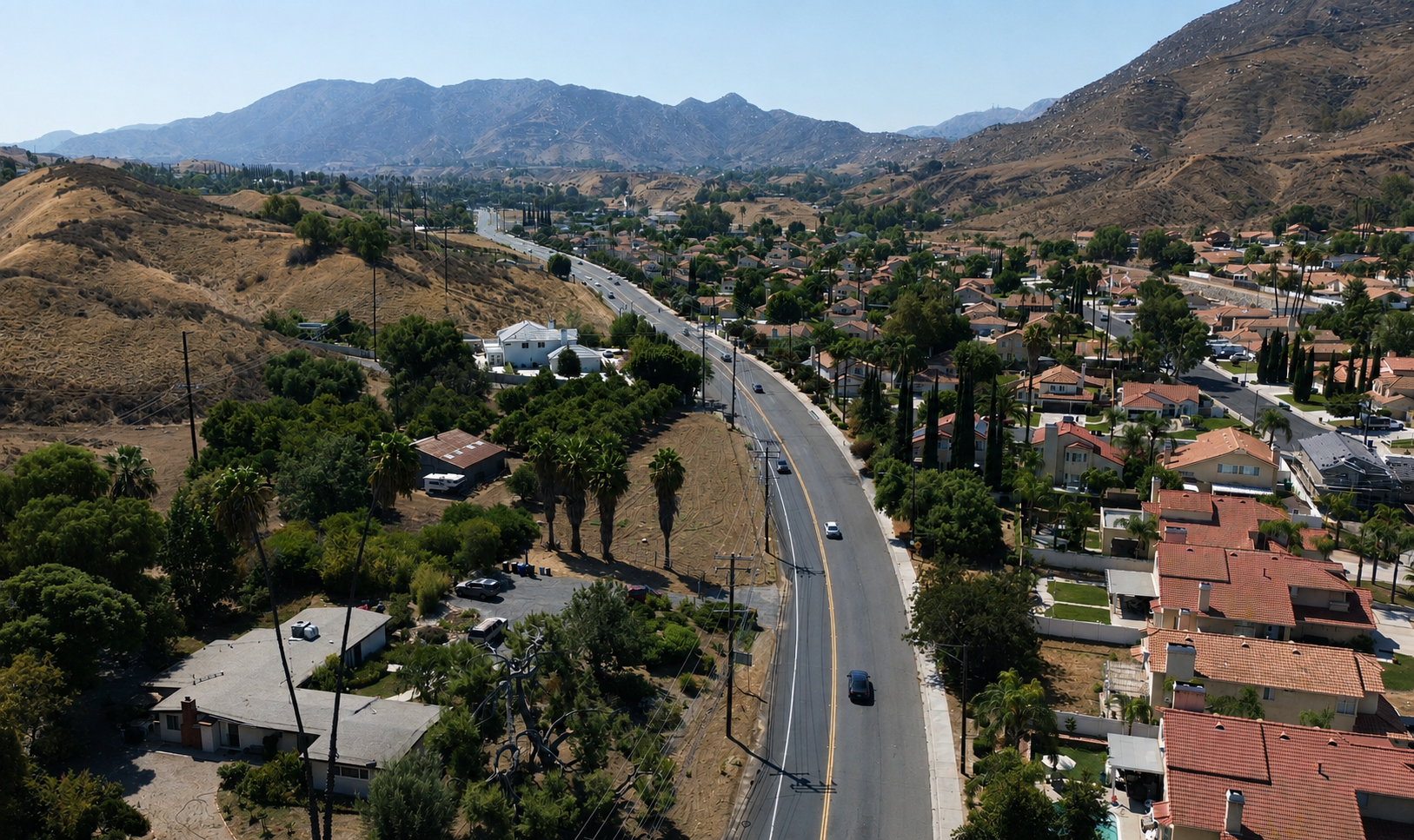
Drive south from Colton and Loma Linda into the canyon and the surroundings begin to change. The terrain becomes more pronounced, hills rise around the roadway, development becomes less uniform, and portions of the area can feel removed from the denser neighborhoods only a few miles away.
That geography is a major part of Reche Canyon's appeal.
It is also why buying a home here deserves a little more research than simply comparing bedrooms, bathrooms and square footage.
Reche Canyon includes established residential neighborhoods, suburban communities such as Reche Canyon Country Estates, hillside properties and areas where lot characteristics, access, drainage, utilities and surrounding land can vary considerably from one property to another.
The canyon also crosses geographic and governmental boundaries. The northern portion is associated primarily with Colton, with Loma Linda nearby, while the canyon continues south across the San Bernardino and Riverside county line.
For buyers researching homes for sale in Reche Canyon, CA, understanding those differences is important.
When helping buyers evaluate Reche Canyon and surrounding communities, Nick Ondatje emphasizes the individual property as much as the neighborhood. Two homes located relatively close together can have very different lots, surroundings, ownership considerations and access to nearby cities.
Here is what buyers should know before moving to Reche Canyon.
Where Is Reche Canyon, California?
Reche Canyon is located in Southern California's Inland Empire, between the Colton and Loma Linda area to the north and communities in Riverside County to the south.
Reche Canyon Road provides the primary north to south route through the canyon.
The geography is somewhat unusual because Reche Canyon is not simply a neighborhood contained within one city.
The City of Colton's Reche Canyon Specific Plan describes a planning area extending from Barton Road on the north to the San Bernardino County line on the south. The broader planning area historically involved portions of Colton, Loma Linda and unincorporated San Bernardino County territory.
Continue south through the canyon and you eventually cross into Riverside County.
This matters when researching real estate because someone saying they want to "live in Reche Canyon" may actually be looking at properties under different jurisdictions depending on exactly where the home is located.
Always verify the city, county, utilities, school boundaries and property specific services for the actual address being considered.
What Does Reche Canyon Feel Like?
The easiest way to understand Reche Canyon is to drive it.
It does not feel like a typical flat Inland Empire subdivision.
The roadway follows the natural canyon environment, with hillsides, open areas, residential pockets and changing elevations along the route.
Some sections feel distinctly suburban.
Others can feel considerably more rural.
That mixture is one of Reche Canyon's defining characteristics.
In fact, the City of Colton's original planning documents specifically described Reche Canyon as transitioning from a predominantly rural community toward a suburban community with different land uses and lifestyles.
That transition is still useful for understanding the area today.
You can find conventional suburban homes and established subdivisions while still being surrounded by terrain that makes the area feel different from central Colton.
Reche Canyon Is Not Just One Neighborhood
This distinction is important for SEO, but it is even more important for buyers.
Reche Canyon refers to the broader geographic area.
Reche Canyon Country Estates is a residential neighborhood within that broader area.
They are not interchangeable.
Someone searching for a home in Reche Canyon may encounter properties in established subdivisions, hillside areas, larger lot settings and other residential pockets.
Someone specifically searching Reche Canyon Country Estates homes for sale is narrowing that search to a more traditional neighborhood environment within the canyon.
Understanding that difference prevents buyers from making assumptions about the entire area based on one subdivision.
Reche Canyon Country Estates
Reche Canyon Country Estates is one of the recognizable residential pockets within the Colton side of Reche Canyon.
Here, the environment becomes more conventionally suburban.
Buyers can find established single family homes on residential streets while still having the hills and terrain of Reche Canyon nearby.
That combination is part of what makes the neighborhood interesting.
You can have a traditional neighborhood setting without feeling like you are in the middle of central Colton.
Homes in the community were developed across different periods, so buyers should still evaluate renovations, major systems and property condition individually.
Recent property tours in the area also demonstrate the kind of housing buyers can encounter here, including larger multi bedroom homes, three car garages and properties with views toward the surrounding terrain.
What Types of Homes Are in Reche Canyon?
Housing varies considerably depending on where you are within the canyon.
Established Suburban Homes
Neighborhoods such as Reche Canyon Country Estates offer more traditional single family housing.
These properties can appeal to buyers who like the canyon environment but still want a recognizable residential neighborhood.
Hillside Properties
Other homes interact much more directly with the terrain.
A hillside property can offer privacy, views and a completely different setting.
But hillside real estate also makes property specific due diligence particularly important.
Slope stability, grading, drainage and retaining improvements can matter.
In fact, current Colton planning conditions within the Reche Canyon Specific Plan continue to address issues including slope stability, soils, drainage and downstream floodwater impacts.
That does not mean every Reche Canyon home has a slope problem.
It means terrain is part of the environment and should be evaluated when relevant to a specific property.
Larger Lot Properties
Some portions of Reche Canyon can offer more land than buyers may typically associate with suburban Inland Empire housing.
A larger lot may create opportunities for outdoor space, privacy, storage or other uses.
But never assume that lot size automatically means a particular use is allowed.
Zoning, easements, topography and jurisdiction all matter.
Rural Feeling Properties
Some properties can feel considerably more rural than the suburban neighborhoods closer to Colton.
That can be exactly what a buyer wants.
It can also mean there are more property specific questions to answer.
The Reche Canyon Specific Plan
One of the things that makes Reche Canyon particularly interesting from a real estate perspective is that Colton has maintained a dedicated planning framework for the area for decades.
The Reche Canyon Specific Plan was initially adopted in 1990.
Colton's Housing Element describes the city's portion of the plan as originally covering approximately 1,562 acres and allowing primarily single family, very low density residential development. The city has described this area as nearing buildout.
The broader original planning study examined approximately 2,920 acres within the Reche Canyon area.
Why does that matter to a homeowner?
Because Reche Canyon's development pattern was not accidental.
The city specifically considered issues such as land use, circulation, infrastructure, landscaping, hillside development and the preservation of characteristics associated with the canyon.
The plan itself was partly a response to increasing development pressure, new tract housing and increasing traffic on Reche Canyon Road.
Those same themes help explain the area today.
Development in Reche Canyon
Reche Canyon continues to have development activity.
The City of Colton currently maintains environmental documentation for projects within the Reche Canyon Specific Plan area, including the Iron Horse Hills subdivision.
This is another reason buyers should research surrounding land rather than assuming the current landscape will remain unchanged.
If a home backs to open acreage or undeveloped hills, investigate what is permitted or proposed nearby.
Ask:
Is the land developable?
Is there an approved subdivision?
Could additional roads eventually connect through the area?
Are there grading plans?
Will views potentially change?
The answer may have no impact on whether you want the property.
The important thing is knowing before purchasing it.
Reche Canyon Road
Reche Canyon Road is central to life in the canyon.
It provides the main route through the area and connects the Colton side of the canyon with Riverside County to the south.
Unlike living in a neighborhood surrounded by multiple major arterial roads, canyon geography naturally concentrates transportation.
That makes location within Reche Canyon particularly important.
A home may look geographically close to another Inland Empire community on a map while the actual driving route tells a different story.
Before purchasing, drive from the property to the places that matter to you.
Do it during the hours you would normally travel.
Do not rely solely on mileage.
Reche Canyon and Loma Linda
Loma Linda is one of the most important nearby employment and service centers.
That makes Reche Canyon potentially interesting to buyers connected to the Loma Linda medical community who want to explore housing outside Loma Linda itself.
The northern portion of the Reche Canyon planning area historically included territory associated with Loma Linda as well as Colton.
But buyers should not assume every Reche Canyon property offers the same commute.
The exact location within the canyon matters.
If proximity to Loma Linda University Health or another medical facility is a major reason for considering Reche Canyon, test the drive from the actual property.
Reche Canyon and Grand Terrace
Grand Terrace is another nearby community buyers often compare with Reche Canyon.
The housing experience can be very different.
Grand Terrace has a more compact suburban layout.
Reche Canyon is defined much more strongly by its canyon geography, changing terrain and mixture of residential environments.
A buyer who likes Grand Terrace because of its location but wants to explore something with more dramatic terrain or a more tucked away feeling may find Reche Canyon worth considering.
Conversely, someone who prioritizes a conventional suburban street network may prefer Grand Terrace.
Neither is inherently better.
They solve different housing preferences.
Reche Canyon vs Colton
This comparison is interesting because much of the northern Reche Canyon residential area is actually within Colton.
Yet Reche Canyon can feel very different from other parts of the city.
Central and northern portions of Colton are influenced by freeways, commercial corridors, industrial areas and older established neighborhoods.
Reche Canyon introduces hills, lower density residential areas and a more geographically contained environment.
That is why buyers searching Colton homes for sale should understand that the city contains very different housing environments.
A home in Reche Canyon Country Estates and a home elsewhere in Colton may share the same city name while offering very different surroundings.
Reche Canyon vs Moreno Valley
Moreno Valley lies on the Riverside County side of the broader area and is another market buyers may consider.
Moreno Valley is much larger and offers extensive suburban development, shopping and major transportation corridors.
Reche Canyon is smaller in scale and much more influenced by its physical geography.
Someone looking for a large suburban city with extensive commercial amenities may prefer Moreno Valley.
Someone attracted to the canyon setting may prefer Reche Canyon.
Again, the commute matters.
Do not assume that two locations appearing close on a map will provide identical access.
Reche Canyon vs Riverside
Riverside offers another completely different housing environment.
It is a major city with multiple distinct neighborhoods, employment centers, universities, shopping districts and freeway connections.
Reche Canyon offers a much more geographically specific residential setting.
Buyers who are considering Riverside because they work in Riverside County but prefer a smaller canyon environment may eventually encounter Reche Canyon during their search.
The decision should come down to the specific property, commute and desired lifestyle rather than city size alone.
What Buyers Should Investigate in Reche Canyon
This is where Reche Canyon differs from a generic subdivision search.
When Nick Ondatje helps buyers evaluate property in Reche Canyon, the recommendation is to investigate the individual parcel carefully rather than assuming that conditions at one nearby home apply to another.
Depending on the property, questions may include:
What jurisdiction is the home actually in?
What utilities serve the property?
Is it connected to sewer or does another wastewater system apply?
Are there easements?
Is the road publicly maintained?
What does the natural hazard disclosure show?
Is the property affected by hillside conditions?
Are there drainage considerations?
Are retaining structures present?
What insurance options are available?
Is surrounding vacant land planned for development?
Are there HOA dues or community restrictions?
Not every question applies to every Reche Canyon home.
That is precisely the point.
Property specific due diligence matters here.
Septic vs Sewer in Reche Canyon
Buyers sometimes assume that every canyon or larger lot property uses a septic system.
Do not make that assumption.
Other buyers make the opposite assumption and expect every property within a city boundary to be connected to municipal sewer.
Do not make that assumption either.
Verify the wastewater system for the individual property.
If a property does use septic, buyers should understand the system, available records and appropriate inspections.
If it is sewer connected, verify that information as part of the transaction.
The same principle applies to water and other utilities.
Drainage and Topography
Water behaves differently when hills and slopes are involved.
That makes drainage an important property specific consideration in canyon environments.
Look at where water would travel during significant rain.
Look at grading.
Look at retaining walls.
Review disclosures and available reports.
If concerns exist, appropriate specialists can provide more information.
Colton's current planning requirements within Reche Canyon specifically address downstream floodwater impacts as well as slope stability and soils.
Again, this does not mean there is a problem with every property.
It means the terrain deserves respect.
Wildfire and Insurance Considerations
Foothill and canyon environments throughout Southern California can present wildfire and insurance considerations that vary dramatically by location.
Buyers should obtain an insurance quote for the actual property early in the process.
Do not rely on what a friend pays nearby.
Do not rely on an online estimate.
And do not assume that because a property is insurable today at a particular cost, every nearby home will receive the same quote.
Insurance markets can change.
Property characteristics matter.
Location matters.
The best approach is to investigate the actual address before getting too far into the transaction.
Roads and Access
Access is easy to overlook during a showing.
A buyer arrives, parks, tours the home and leaves.
But think about how you will use that road every day.
Is access straightforward?
How does the route feel at night?
How does traffic behave during commuting hours?
If the property is on a smaller road, who maintains it?
Are there easements?
Is there enough room for the vehicles you own?
These questions become more important as properties become less conventionally suburban.
Reche Canyon for Loma Linda Medical Professionals
One reason Reche Canyon deserves more attention in local real estate content is its relationship with Loma Linda.
Loma Linda University Health is a major employment center, and housing searches connected to the medical community do not have to stop at the Loma Linda city boundary.
Depending on the buyer's schedule and priorities, nearby communities such as Redlands, Grand Terrace, Colton and Reche Canyon can all become part of the conversation.
Reche Canyon offers something particularly different because of its setting.
Someone who spends a workday in a major medical environment may appreciate coming home to a neighborhood surrounded by hills and less urban development.
But commute convenience should be tested rather than assumed.
Does Reche Canyon Have an HOA?
There is no single answer for the entire canyon.
Reche Canyon is a geographic area containing different neighborhoods and property types.
Some properties may be located within homeowners associations.
Others may not.
Never assume HOA status because of the neighborhood name or appearance.
Verify the individual property.
If an HOA exists, review the dues, financial information, governing documents and rules as part of the purchase process.
Is Reche Canyon Rural?
Parts of Reche Canyon can certainly feel rural or semi rural.
Other sections are clearly suburban.
That mixture has existed for decades.
Colton's original Specific Plan explicitly discussed the canyon's transition from a predominantly rural community toward a suburban community with diverse land uses and lifestyles.
So describing all of Reche Canyon as either rural or suburban oversimplifies it.
The better question is:
Which part of Reche Canyon are you considering?
Is Reche Canyon in Colton?
Part of it is.
Many of the residential neighborhoods buyers associate with northern Reche Canyon are within Colton.
But Reche Canyon itself extends beyond a single city boundary.
The historic planning area included portions of Colton, Loma Linda and unincorporated San Bernardino County territory, while the physical canyon continues south into Riverside County.
This is why checking the actual property address and jurisdiction is important.
Is Reche Canyon Close to Loma Linda?
Yes.
The northern Reche Canyon area is close to Loma Linda and can be relevant to buyers who work around Loma Linda University Health and the surrounding medical community.
Actual commute time depends on the property's location and traffic.
Is Reche Canyon Close to Grand Terrace?
Yes.
Grand Terrace is one of the nearby communities that buyers may compare with Reche Canyon.
The two offer noticeably different environments despite their proximity.
Is Reche Canyon Close to Moreno Valley?
The canyon extends south toward Riverside County, making Moreno Valley another nearby community in the broader geographic area.
However, access depends on where within the canyon a property is located.
Always evaluate the actual route rather than straight line distance.
Is Reche Canyon a Good Place to Live?
Reche Canyon can be a strong fit for someone who values hills, views, a more tucked away residential environment and proximity to communities such as Colton and Loma Linda.
Someone who wants immediate freeway access, extensive nearby shopping or a highly uniform suburban environment may prefer another location.
The right answer depends on the property and the buyer.
What Are Homes Like in Reche Canyon Country Estates?
Reche Canyon Country Estates offers established single family homes in a more conventional residential neighborhood setting within the broader canyon environment.
Properties vary in size, condition, upgrades and lot characteristics.
Buyers should evaluate each home individually rather than assuming all homes in the community are comparable.
Are There Larger Lots in Reche Canyon?
Yes, larger lot properties can be found in portions of the broader Reche Canyon area.
Lot size alone does not determine permitted uses.
Buyers interested in additional structures, animals, recreational vehicles or other specific uses should verify zoning and applicable regulations for the individual parcel.
Does Reche Canyon Have Mountain or Canyon Views?
Many properties throughout the area benefit from views of surrounding hills, ridges or canyon terrain.
Views vary substantially by property.
If a particular view is important to the purchase decision, buyers should also investigate nearby vacant land and potential future development.
What Should Buyers Check Before Purchasing in Reche Canyon?
At minimum, buyers should investigate the individual home's condition, jurisdiction, utilities, insurance, natural hazard disclosures, drainage, access, HOA status where applicable and nearby development.
Hillside or larger lot properties may require additional investigation depending on their specific characteristics.
What Makes Reche Canyon Different?
The biggest difference is geography.
Reche Canyon is not simply another subdivision built on flat land.
The hills and canyon shape the roads, development pattern, views and overall feeling of the area.
That creates variety.
A buyer can tour a conventional home in Reche Canyon Country Estates and then travel a relatively short distance to a property that feels much more rural.
Few housing searches demonstrate the importance of evaluating the individual property as clearly as Reche Canyon does.
What Buyers Often Get Wrong About Reche Canyon
The first mistake is assuming Reche Canyon is one neighborhood.
It is not.
The second is assuming everything with a Colton address feels like central Colton.
It does not.
The third is assuming a canyon property automatically has septic, acreage or unusual access.
Those things must be verified.
The fourth is looking only at the house.
In Reche Canyon, the land and surroundings can be just as important.
Look uphill.
Look downhill.
Look at neighboring parcels.
Look at vacant land.
Look at drainage.
Drive the road.
Check the commute.
Then evaluate the house.
That provides a much more complete picture.
Why Reche Canyon Deserves Its Own Home Search
Buyers often begin with city names.
Loma Linda.
Colton.
Grand Terrace.
Moreno Valley.
Riverside.
But Reche Canyon demonstrates why geographic areas and neighborhoods can sometimes be more useful than city boundaries.
A buyer might say they would never consider Colton based on their impression of another part of the city, then discover that Reche Canyon offers exactly the environment they wanted.
Another buyer might initially love the canyon scenery but ultimately decide they prefer the convenience of Grand Terrace or Loma Linda.
Both outcomes are useful.
The goal is not to convince every buyer to live in Reche Canyon.
The goal is to understand the area well enough to decide whether it fits.
Frequently Asked Questions About Reche Canyon, CA
Where is Reche Canyon?
Reche Canyon is in Southern California's Inland Empire. The northern portion is primarily associated with Colton and the Loma Linda area in San Bernardino County, while the canyon continues south into Riverside County.
Is Reche Canyon a neighborhood in Colton?
Reche Canyon is a broader geographic area rather than one single Colton neighborhood. Several residential communities within the northern canyon are associated with Colton.
What is Reche Canyon Country Estates?
Reche Canyon Country Estates is an established residential neighborhood within the broader Reche Canyon area on the Colton side of the canyon.
Is Reche Canyon near Loma Linda University Medical Center?
Northern Reche Canyon is relatively close to Loma Linda. Buyers working within the Loma Linda medical community may consider Reche Canyon alongside Loma Linda, Grand Terrace, Colton and Redlands. Actual commute times should be tested from the individual property.
Are homes in Reche Canyon on septic systems?
Some properties may use septic systems while others may have different wastewater service. Buyers should verify the system serving the individual property rather than assuming based on the area.
Does Reche Canyon have wildfire risk?
Wildfire and insurance considerations vary by location and property. Buyers should review the natural hazard information for the individual property and obtain an insurance quote early in the purchasing process.
Are there hillside homes in Reche Canyon?
Yes. Reche Canyon's terrain includes hills and slopes, and some homes interact directly with that topography. Property specific drainage, grading, soils and slope conditions should be investigated where relevant.
Is Reche Canyon rural?
Some portions have a rural or semi rural character while others are established suburban neighborhoods. The area has historically transitioned from rural development toward a mixture of suburban and lower density residential uses.
Is Reche Canyon close to Grand Terrace?
Yes. Grand Terrace is one of the nearby communities buyers commonly consider when searching the northern Reche Canyon and Colton area.
Is Reche Canyon close to Moreno Valley?
Yes, particularly when considering the broader canyon extending south into Riverside County. Driving access varies depending on the exact property location.
Should You Move to Reche Canyon, California?
Reche Canyon makes the most sense when buyers understand what makes it different.
It is not simply Colton with hills.
It is not one subdivision.
And it is not uniformly rural.
Reche Canyon is a geographically distinct area where suburban neighborhoods, hillside terrain, larger parcels and open land can exist relatively close to one another.
That variety is the attraction.
It is also why due diligence matters.
Someone considering Reche Canyon should spend time driving the entire area rather than touring one house and immediately leaving.
Start near Barton Road.
Explore the residential streets around Reche Canyon Country Estates.
Drive Reche Canyon Road.
Pay attention to the terrain.
Look at how development changes.
Continue toward the county line.
Then compare the experience with Grand Terrace, Loma Linda and other parts of Colton.
That exercise makes the differences obvious.
For buyers considering the area, Nick Ondatje recommends comparing Reche Canyon properties based on the complete picture: the home, lot, terrain, access, insurance, utilities, surrounding development and commute.
That approach is particularly important in a place where properties located only a short distance apart can offer very different living environments.
If Reche Canyon fits what you are looking for, the next step is not simply finding a house with the right bedroom count.
It is finding the right part of Reche Canyon and the right property within it.
About Nick Ondatje
Nick Ondatje is a REALTOR® with Mainstreet Realtors serving buyers and sellers throughout Reche Canyon, Colton, Loma Linda, Grand Terrace, Redlands and surrounding Inland Empire communities.
Through local real estate guides, neighborhood information, property tours and real estate education, Nick helps buyers understand the differences between Southern California communities and evaluate the property specific details that can affect a real estate decision.
Nick Ondatje | REALTOR®
Mainstreet Realtors
CA DRE 01401990
909-437-0132
www.nickondatje.com
Check out this article next