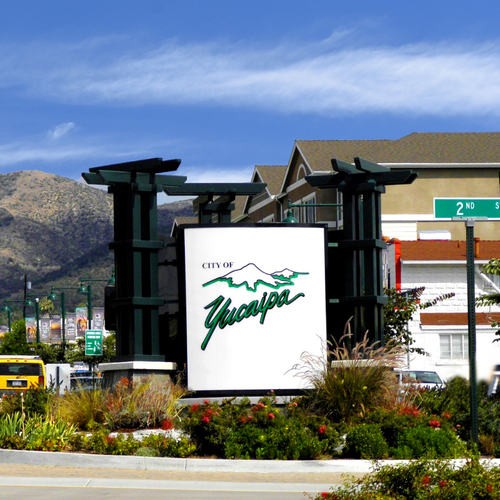

If you're thinking about living in Yucaipa, CA, there's a good chance you're looking for something a little different from what you'll find in many other parts of Southern California.
Yucaipa sits at the eastern end of the San Bernardino Valley, where suburban neighborhoods begin transitioning into foothills, open space and the communities leading toward Oak Glen and the San Bernardino Mountains.
I've worked with buyers and sellers throughout Yucaipa and the Inland Empire for more than two decades, and one thing I've learned is that people often have a very different impression of Yucaipa after they actually spend some time here.
Some buyers come looking for larger lots.
Others want mountain views or a quieter residential setting.
Some are relocating from Orange County, Los Angeles County or other parts of the Inland Empire and are simply trying to understand what their money buys farther east.
Whatever brings you here, Yucaipa isn't going to be the right fit for everybody.
And that's exactly what this guide is about.
Rather than giving you another generic list telling you why Yucaipa is "amazing," let's talk about the real advantages and tradeoffs of living in Yucaipa, California.
Pro: Yucaipa Doesn't Feel Like One Giant Subdivision
One of the things I like about showing homes in Yucaipa is the variety.
Drive through Chapman Heights and you'll find a large master-planned community with trails, parks and maintained common areas.
Head toward North Bench and Upper Yucaipa and you'll encounter a different environment with changes in elevation, larger lots and mountain views.
Continue toward Wildwood Canyon and parts of Yucaipa begin feeling even more connected to the foothills and the area's rural history.
Then you have established neighborhoods around Central Yucaipa and Uptown that look completely different again.
For buyers, that means you don't necessarily have to choose between "living in Yucaipa" and "not living in Yucaipa."
You first need to figure out which Yucaipa you're looking for.
That's an important distinction.
I've had buyers change their minds about what they wanted simply after driving different parts of town.
Con: Your Location Within Yucaipa Can Change Your Daily Routine
The variety is great, but there's another side to it.
Where you live within Yucaipa matters.
A home closer to Interstate 10 can create a different commute and daily routine than a property farther into North Bench, Wildwood Canyon or toward Oak Glen.
On a map, the difference may not look dramatic.
When you're making that drive every morning and evening, it matters more.
According to current U.S. Census Bureau data, the average travel time to work for Yucaipa workers is about 32.6 minutes.
Of course, your actual commute could be considerably shorter or longer depending on where you work.
If you're considering moving here and commuting toward Redlands, Loma Linda, San Bernardino, Riverside or farther west, I recommend testing the drive during the hours you'd actually be traveling.
Don't just look at the mileage.
Drive it.
Pro: You're Close to Some Great Outdoor Recreation
This is one of the biggest lifestyle differences between Yucaipa and more densely developed parts of the Inland Empire.
The foothills are part of the backdrop here.
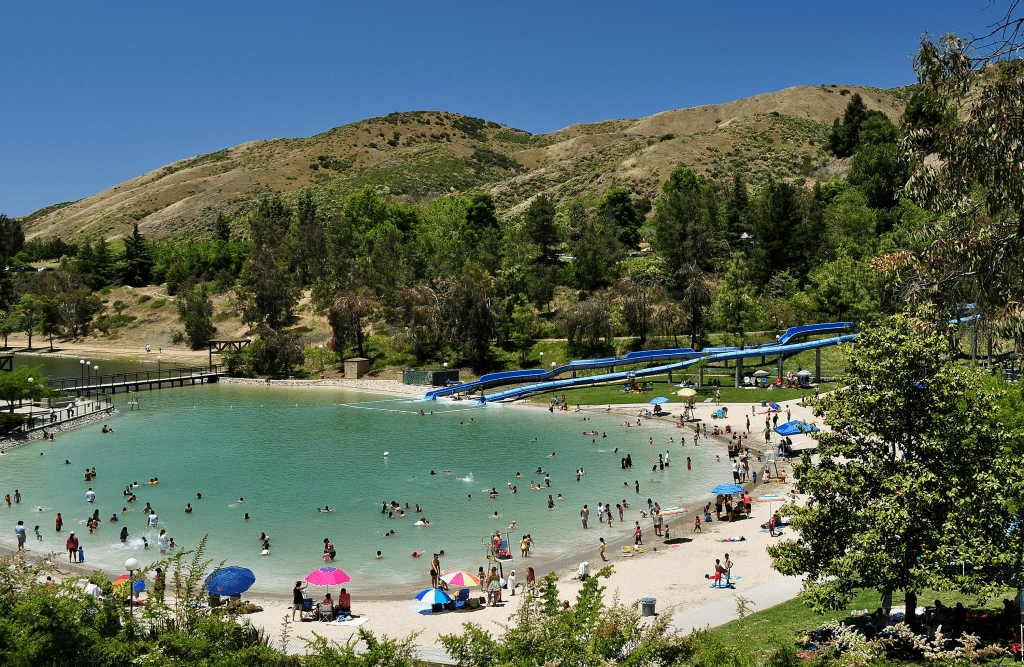
Yucaipa Regional Park is one of the city's most recognizable recreational destinations and offers three lakes, fishing, camping, trails, picnic areas and seasonal swimming facilities.
Then you have Wildwood Canyon and access toward Oak Glen nearby.
For someone who enjoys getting outside, those aren't abstract amenities listed on a relocation website.
They're actually part of the area.
And depending on which part of Yucaipa you live in, mountain and foothill views can become part of your everyday surroundings.
Con: Yucaipa Isn't a Big-City Entertainment Destination
This is one of those things that's better to understand before moving here.
If your ideal Saturday night involves walking out your front door into a dense restaurant district, major nightlife scene or huge entertainment complex, Yucaipa probably isn't going to replicate that experience.
There are restaurants, local businesses, shopping centers and the Uptown district, but Yucaipa still has a different scale and pace than a larger Southern California city.
For more extensive shopping, entertainment or dining options, residents may find themselves heading toward surrounding cities depending on what they're looking for.
Some people see that as a drawback.
Other people specifically move here because they don't want to live in the middle of a major commercial center.
Know which one you are.
Pro: Uptown Gives Yucaipa a Recognizable Center
One thing that helps Yucaipa maintain its own identity is Uptown Yucaipa.
Rather than being nothing but shopping centers along major roads, Yucaipa has an established central corridor with local businesses, restaurants, community events and ongoing public investment.
That's important to the character of the city.
And Uptown has continued evolving.
If you're considering moving here, I'd recommend spending an afternoon walking around Uptown rather than simply driving through Yucaipa Boulevard.
Grab something to eat.
Walk the area.
Then drive the surrounding residential streets.
You'll understand Central Yucaipa much better than you will from Google Maps.
Pro: There Is Real Variety in the Housing Stock
This is probably one of Yucaipa's biggest advantages from a real-estate standpoint.
Depending on your budget and what's available at the time, you may encounter:
Master-planned communities
Established suburban neighborhoods
Older homes
Newer construction
Larger lots
Foothill properties
Homes with mountain or valley views
HOA communities
Non-HOA neighborhoods
Properties with RV access
Homes with additional outdoor space
That variety creates options.
But it also creates one of the biggest mistakes I see buyers make.
They start comparing every Yucaipa house as if they're interchangeable.
They're not.
Two homes can be a mile apart and appeal to completely different buyers.
Lot size, neighborhood, elevation, view, HOA, condition, upgrades and even the exact street can influence value.
That's why understanding the local market matters here.
Con: Some Properties Require More Homework
A larger lot and foothill location can look fantastic in listing photos.
But those properties can also introduce considerations that buyers coming from more conventional suburban neighborhoods haven't dealt with before.
Depending on the individual property, you may need to investigate:
Fire-hazard exposure
Homeowners insurance
Drainage
Slope
Septic versus sewer
Property boundaries
Road access
Trees and vegetation
Outbuildings
Previous additions
Lot usability
This doesn't apply to every Yucaipa home.
And it certainly doesn't mean these properties should be avoided.
It means don't confuse beautiful scenery with simple ownership.
Sometimes the property with the incredible view deserves a little more due diligence.
Pro: You Can Still Find a Strong Sense of Local Identity
Yucaipa has grown considerably from its agricultural past, but you can still see pieces of that history throughout the community.
That's something I think gets overlooked when people compare cities based entirely on home prices and commute times.
Yucaipa has its own history, its own neighborhoods, its own Uptown district and long-established local institutions.
Even Stater Bros., which became one of Southern California's best-known supermarket chains, traces its beginnings to Yucaipa, where twin brothers Cleo and Leo Stater opened their first market in 1936.
Those kinds of details matter because they help explain why Yucaipa doesn't simply feel like an extension of the cities farther west.
It has its own story.
Con: Wildfire and Insurance Deserve Serious Attention
This is one area where I would never tell a buyer to make assumptions.
Yucaipa sits against foothill and wildland areas, and the City's own General Plan addresses wildland fire among the natural hazards affecting the community.
That does not mean every property in Yucaipa carries the same wildfire exposure or insurance situation.
Far from it.
Risk can be very property-specific.
Before removing contingencies on a home, buyers should investigate the property's hazard disclosures and obtain actual homeowners insurance quotes.
Not an estimate from a friend.
Not what somebody else pays down the street.
A quote for that property.
Insurance markets can change, so this is one of those expenses I want buyers understanding early rather than discovering late in escrow.
What Surprises Buyers About Yucaipa?
One of the biggest surprises is usually how much the city changes as you drive through it.
Someone who has only stopped near Interstate 10 hasn't really seen Yucaipa.
Head farther north and the elevation changes.
Drive toward Wildwood Canyon and the density changes.
Go through Chapman Heights and you see another type of neighborhood.
Spend time around Uptown and you get another perspective again.
That's why when I'm working with somebody who's new to Yucaipa, I don't like immediately narrowing their search to one tiny area based on what they've read online.
First, learn the city.
Then decide where you want to live.
How Big Is Yucaipa?
Yucaipa isn't a tiny mountain town anymore.
The U.S. Census Bureau's July 2025 estimate puts the population at approximately 54,953 residents.
At the same time, Yucaipa covers more than 28 square miles of land.
That combination helps explain something you'll notice when driving around town:
Different portions of Yucaipa can feel surprisingly distinct from one another.
The city's population has grown, but geography and topography still play a major role in its character.
Is Yucaipa a Good Place for Commuters?
It depends entirely on where you're going.
Yucaipa provides access to Interstate 10, which connects residents west toward Redlands, Loma Linda, San Bernardino and the broader Inland Empire.
But commute decisions should be made based on your actual destination and schedule.
If you work in Redlands, that's one calculation.
If you're driving to Riverside, Ontario or Orange County regularly, that's another.
And if you work remotely most of the week, the equation changes again.
This is why I don't like generic statements such as "Yucaipa is great for commuters."
Great for commuting where?
That's the question that matters.
Is Yucaipa a Good Place to Retire?
For some buyers, Yucaipa's residential setting, outdoor recreation and variety of housing can make it worth considering during retirement.
But retirement needs vary considerably.
Someone prioritizing a larger single-story home may have different criteria than someone who wants minimal property maintenance.
Healthcare access, transportation, housing costs, insurance and proximity to family should all factor into the decision.
The same principle applies here as it does to every other buyer:
Choose the property and location based on how you plan to live.
Is Yucaipa a Good Place to Raise a Family?
This is another question I get that doesn't have a universal yes-or-no answer.
Families should evaluate the things that matter to them personally, including housing needs, commute, schools, parks, activities and budget.
If schools are an important part of your decision, research the current school boundaries and programs directly rather than assuming a home attends a particular school because of its neighborhood name.
Boundaries and programs can change.
What I can tell you from a housing perspective is that Yucaipa offers many different residential environments, from planned neighborhoods to homes on larger lots.
Which one makes sense depends on the family.
So, What Are the Biggest Pros and Cons of Living in Yucaipa?
If I had to simplify it, I'd put it this way.
The advantages are the variety of neighborhoods and homes, foothill setting, outdoor recreation, local identity and the ability to choose between more suburban and lower-density residential environments.
The tradeoffs are that your commute can become significant depending on where you work, Yucaipa doesn't offer the scale of entertainment and shopping found in larger cities, and certain foothill or larger-lot properties may require additional investigation involving insurance, fire exposure, drainage or land.
Neither list tells you whether you should move here.
That's intentional.
A good relocation guide shouldn't sell you on a city.
It should help you decide whether that city actually fits your life.
Before Moving to Yucaipa, Do This
Spend a day here.
Not an hour.
Start near Uptown.
Drive through Central Yucaipa.
Go through Chapman Heights.
Head toward North Bench and Upper Yucaipa.
Drive Wildwood Canyon.
Stop at Yucaipa Regional Park.
Then make the drive from the neighborhood you're considering to your workplace, grocery store or wherever you'd regularly need to go.
You'll learn more doing that than you will reading twenty "best places to live" lists online.
After more than two decades helping buyers and sellers throughout Yucaipa and the Inland Empire, that's one of the biggest pieces of advice I can give someone considering a move here:
Don't decide whether you like Yucaipa until you've actually experienced the different parts of Yucaipa.
If you're considering moving to Yucaipa, buying a home in Yucaipa or selling a Yucaipa property, I'd be happy to help you understand the neighborhoods and the local real-estate market.
Nick Ondatje | Mainstreet Realtors
CA DRE #01401990
909-437-0132
www.nickondatje.com
Check out this article next