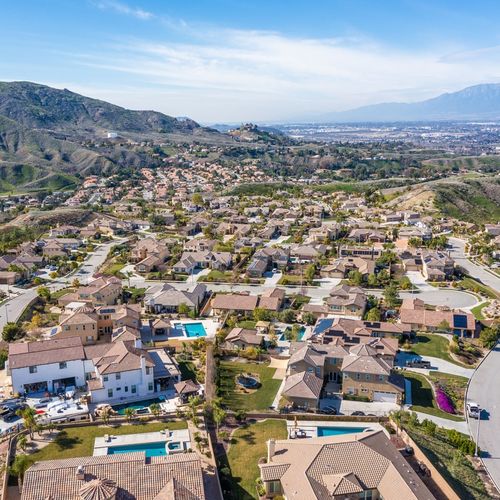

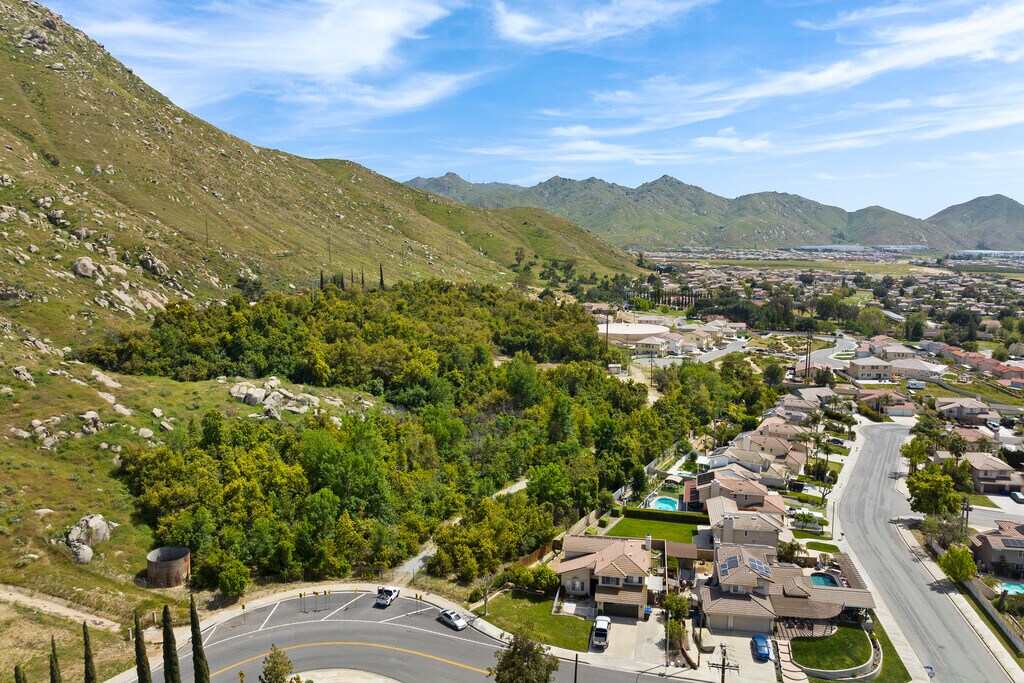
If you are thinking about moving to Grand Terrace, California, there is one thing that immediately separates it from many surrounding Inland Empire communities.
Grand Terrace is small.
And that is a big part of the appeal.
Sitting between Colton and Riverside along the Interstate 215 corridor, Grand Terrace has a more compact, primarily residential feel than many of the larger cities surrounding it. The city describes its location as being between the major metropolitan areas of Riverside and San Bernardino, while Blue Mountain rises immediately alongside the community and has become such an important local landmark that Grand Terrace calls itself The Blue Mountain City.
For home buyers, Grand Terrace can be easy to overlook.
Someone relocating to work in Loma Linda may start their search in Loma Linda or Redlands.
Someone working in Riverside may automatically begin in Riverside.
Someone already looking at Colton may focus on Cooley Ranch.
But Grand Terrace sits right in the middle of those markets, and for the right buyer, that location combined with its established neighborhoods and smaller city environment can make it worth a serious look.
So if you are considering living in Grand Terrace, CA, here is what you should know about the homes, location, lifestyle and surrounding communities before making a move.
Where Is Grand Terrace, California?
Grand Terrace is located in San Bernardino County in Southern California's Inland Empire.
The city sits along the Interstate 215 corridor between Riverside and San Bernardino. Colton is immediately north, while Riverside County begins just south of the community.
Loma Linda is also nearby to the northeast.
That location is one of the most important things to understand about Grand Terrace real estate.
You can live in a relatively small residential city while remaining close to several of the Inland Empire's major employment centers.
For households where people work in different cities, that can be particularly useful.
One person may commute toward Loma Linda.
Another may commute toward Riverside.
Grand Terrace puts you between the two rather than forcing the household to choose one side of the region.
Why Is It Called Grand Terrace?
Grand Terrace has an interesting history that helps explain the community you see today.
The area was originally known simply as The Terrace because of its elevated location.
In the early 1900s, Charles Patton and M.L. Howell purchased approximately 300 acres and divided the property into agricultural parcels ranging from about eight to twenty acres. They named the tract Grand Terrace.
Agriculture became an important part of the community.
Irrigation from the surrounding water systems helped support citrus production, and orange groves became part of the local landscape.
Grand Terrace was even known as South Colton for many years before residents pushed to establish their own municipal identity.
That effort eventually succeeded.
Residents voted overwhelmingly in favor of incorporation, and Grand Terrace officially became a city on November 30, 1978.
That history still shows up in the city's identity today.
The Blue Mountain City
You cannot really talk about Grand Terrace without talking about Blue Mountain.
Blue Mountain rises above the eastern side of the city and is the community's defining geographic landmark.
The City of Grand Terrace specifically identifies Blue Mountain as an important scenic and open space resource and has designated it as a community symbol.
That is why you will see Blue Mountain referenced throughout the city.
It appears in local branding.
It appears in community history.
It even appears in artwork around town.
Gwen Karger Park, for example, includes a mural based on the historic Blue Mountain orange crate label that was once used for locally grown oranges.
For home buyers, Blue Mountain also gives Grand Terrace a distinct visual identity.
Depending on the location of the property, you may have views toward the mountain or the surrounding hills.
That creates a different feeling from flatter portions of the Inland Empire.
What Types of Homes Can You Find in Grand Terrace?
Grand Terrace is primarily an established residential community.
Unlike Beaumont, where large master planned developments and newer construction define significant portions of the housing market, Grand Terrace developed over a longer period and has a more established suburban character.
The city's housing history reflects that evolution.
Historic aerial records show that Grand Terrace remained predominantly agricultural in the late 1930s, with residential development beginning around areas such as Barton Road, McClarren Street and Michigan Avenue.
Residential development increased substantially during the following decades, particularly after Interstate 215 was constructed through the area.
Today, buyers may encounter several types of housing.
Established Single Family Homes
This is probably what most buyers picture when they think about Grand Terrace.
You will find traditional suburban neighborhoods with detached single family homes built during different periods.
The age, architecture, lot size and condition can vary substantially from street to street.
Hillside Homes
Properties closer to Blue Mountain and elevated portions of the city can offer a different setting.
Depending on the property, buyers may find hillside terrain, views and closer proximity to open space.
Condos and Townhomes
Grand Terrace also has attached housing options.
These can appeal to buyers who prioritize location or lower exterior maintenance over having a traditional detached property.
Multifamily Housing
Multifamily housing exists within the city as well, particularly around portions of the Barton Road corridor and other designated areas.
Grand Terrace is also planning for additional housing opportunities through its current Housing Element and related zoning efforts.
What Does Grand Terrace Feel Like?
This is where Grand Terrace separates itself from some surrounding cities.
It feels compact.
You can drive across much of the community relatively quickly.
Residential neighborhoods make up a significant part of the city's character, while Barton Road serves as the primary commercial corridor.
Blue Mountain creates a recognizable backdrop.
And because the city is geographically small, you are rarely very far from neighboring communities.
That creates an interesting combination.
Grand Terrace has its own city government and identity, but residents are also deeply connected to the larger Inland Empire around them.
You might live in Grand Terrace, work in Loma Linda, shop in Riverside and eat dinner in Redlands.
That is completely normal.
Barton Road
If Blue Mountain is Grand Terrace's geographic landmark, Barton Road is its everyday commercial spine.
Barton Road runs through the community and contains shopping, restaurants, professional services and other businesses.
The city has a dedicated Barton Road Specific Plan designed to guide development along this important corridor.
The plan includes commercial areas as well as opportunities for multifamily and small lot residential development.
For someone considering Grand Terrace, Barton Road is worth driving from end to end.
It gives you a good sense of how the city functions.
You can see where residents shop.
You can see the commercial areas.
You can see how neighborhoods connect to the main corridor.
And you can understand how quickly Grand Terrace transitions into surrounding communities.
Grand Terrace vs Colton
This is probably the most obvious comparison.
Grand Terrace sits immediately south of Colton.
But the two cities can feel very different.
Colton is larger and includes a broad mixture of residential neighborhoods, transportation infrastructure, industrial areas, historic neighborhoods and commercial development.
Grand Terrace is smaller and more residential in character.
The comparison becomes especially interesting around Cooley Ranch.
Cooley Ranch is in southern Colton, which places it very close to Grand Terrace.
A buyer may find two homes only a short distance apart that are technically located in different cities.
That is why I would not let the municipal boundary determine your search.
If you like Grand Terrace, look at Cooley Ranch.
If you like Cooley Ranch, look at Grand Terrace.
Compare the homes themselves.
Grand Terrace vs Loma Linda
Grand Terrace can also be an interesting alternative for buyers searching Loma Linda.
Loma Linda has a very specific identity centered around Loma Linda University and the surrounding medical community.
Housing demand there is heavily influenced by the university, medical center and healthcare workforce.
Grand Terrace provides another residential option nearby.
For someone working at Loma Linda University Medical Center, the question becomes whether living directly in Loma Linda is more important than finding the type of home they prefer.
Grand Terrace may offer different housing styles, lot configurations and neighborhood environments while keeping you within the broader Loma Linda area.
If you work unusual medical shifts, test the actual commute from any property you are considering.
The experience at 6 in the morning can be very different from the experience during traditional rush hour.
Grand Terrace vs Riverside
Riverside is considerably larger than Grand Terrace.
It has a major downtown, multiple commercial districts, historic neighborhoods, the University of California, Riverside and a much broader range of housing environments.
Grand Terrace is almost the opposite.
It is compact and primarily residential.
Someone who wants access to a larger city's restaurants, entertainment and employment opportunities may prefer Riverside.
Someone who wants to live in a smaller community while remaining close to Riverside may prefer Grand Terrace.
Interstate 215 provides the primary regional connection between the two areas.
If you work in Riverside, Grand Terrace can absolutely be worth putting on your home search map.
Grand Terrace vs Redlands
Redlands is another nearby market that offers a very different lifestyle.
Redlands has historic architecture, mature neighborhoods, a traditional downtown, the University of Redlands and a much larger collection of restaurants and local businesses.
Grand Terrace is quieter and more compact.
If downtown lifestyle is important to you, Redlands may be the stronger fit.
If you are more focused on having an established residential neighborhood with access to several surrounding employment centers, Grand Terrace may deserve more attention.
Again, this is not about one city being better.
It is about finding the location that works for your actual life.
Grand Terrace and Loma Linda University Medical Center
This deserves its own section because healthcare employment is such an important part of the local housing market.
Loma Linda University Health is one of the major employment anchors in this part of the Inland Empire.
People relocating for positions at the medical center often begin by searching Loma Linda and Redlands.
I would expand that search.
Grand Terrace should be considered alongside Loma Linda, Redlands, Colton and nearby communities.
The advantage is geographic.
You can remain within the immediate regional area while gaining access to a different housing market.
For medical professionals working long or irregular shifts, location can become especially important.
A home that saves you time after a twelve hour shift may be more valuable to you than another property with a slightly larger kitchen.
Commuting From Grand Terrace
Interstate 215 is the primary freeway serving Grand Terrace.
The city itself describes its location along the 215 corridor between Riverside and San Bernardino as one of its advantages.
That gives residents relatively direct access north and south through the Inland Empire.
From Grand Terrace, commuters may travel toward Riverside, San Bernardino, Colton or connect with other regional freeways depending on their destination.
Loma Linda and Redlands are accessible through the surrounding local road and freeway network.
But as with every Inland Empire city, the map only tells part of the story.
Traffic matters.
If you are buying specifically because Grand Terrace appears close to your workplace, drive the commute during your actual work hours before making a decision.
Is Grand Terrace Walkable?
Grand Terrace is not a traditional walkable downtown city.
Most residents will rely on a vehicle for many everyday trips.
However, walkability varies by property.
A home close to Barton Road may provide easier access to certain businesses and services.
A property deeper inside a residential neighborhood may offer pleasant neighborhood walking but require driving for shopping.
If walkability is important to you, test it yourself.
Walk from the property to the places you expect to use.
A map can tell you the distance.
It cannot tell you whether you enjoy the route.
Parks and Recreation in Grand Terrace
For a small city, parks and recreation are an important part of Grand Terrace's community planning.
The city's General Plan identifies multiple public parks and recreational areas throughout Grand Terrace, along with school recreational facilities and open space around Blue Mountain.
One of the better known community gathering places is Richard Rollins Community Park.
The city uses the park for community events, including the Blue Mountain Festival.
There is also Gwen Karger Park, a smaller community park featuring murals that celebrate Grand Terrace's citrus and honey heritage.
These spaces reinforce something important about Grand Terrace.
This is not a city built around one massive entertainment district.
The lifestyle is more neighborhood and community oriented.
Blue Mountain and Open Space
Blue Mountain is more than scenery.
The city has specifically identified portions of the mountain for open space preservation.
Grand Terrace owns land on the hillside associated with the Grand Terrace Wilderness Park, and the city's planning documents discuss protecting Blue Mountain for recreation, natural resources and community identity.
For buyers attracted to hillside or mountain adjacent properties, this can be a meaningful part of the appeal.
But proximity to hills also means you should evaluate the individual property carefully.
Terrain, drainage, insurance and wildfire considerations can vary by location.
A mountain view is a feature.
Understanding the property behind that view is part of doing your homework.
Grand Terrace's Citrus History
Grand Terrace's agricultural history is easy to miss if you only know the modern residential city.
Irrigation helped transform the area into productive agricultural land, and citrus became an important local crop.
The severe freeze of 1913 damaged many citrus groves, after which farmers also planted crops such as walnuts and peaches.
The legacy remains visible in the city's imagery and local landmarks.
That is one of the reasons Blue Mountain appears so frequently in Grand Terrace branding.
The historic Blue Mountain packing house used imagery of the mountain on orange crate labels, connecting the landscape directly with the area's citrus economy.
This is the kind of local history that helps explain why Grand Terrace has such a distinct identity despite being surrounded by much larger cities.
Shopping and Restaurants
Grand Terrace has everyday shopping and dining primarily around Barton Road and nearby commercial areas.
But this is where the city's location becomes especially important.
You are not limited to Grand Terrace.
Colton is immediately north.
Riverside is south.
Loma Linda is nearby.
Redlands is a relatively short regional trip.
So if you are expecting Grand Terrace itself to provide the restaurant and shopping variety of Riverside or Redlands, that is probably the wrong expectation.
The tradeoff is that you can live in a smaller residential community while using the amenities of the larger cities around you.
For many residents, that arrangement works perfectly well.
Future Development Along Barton Road
Grand Terrace is established, but that does not mean nothing is changing.
The Barton Road corridor remains an important focus for future development.
The city's Housing Element identifies opportunities for additional residential and mixed use development, including projects intended to bring new housing, retail, restaurants and other commercial uses to portions of the corridor.
The city is also implementing housing related planning changes as part of its current Housing Element.
For a buyer, that means you should look at more than what exists today.
If you are purchasing near vacant or underdeveloped property, investigate what could eventually be built there.
That advice applies everywhere, but it becomes particularly important in a small city where a single development can have a noticeable impact on the surrounding area.
What Is the Weather Like in Grand Terrace?
Grand Terrace has the warm inland climate typical of this portion of Southern California.
Summers can be hot and dry.
Winters are generally mild.
If you are moving from coastal Southern California, summer temperatures may be one of the bigger adjustments.
When touring homes, look beyond cosmetic finishes.
How old is the air conditioning system?
What condition are the windows in?
How much afternoon sun hits the house?
Is there mature shade?
Does the property have solar?
If it does, is the solar owned, financed or leased?
Those questions can matter much more after you move in than the color of the kitchen cabinets.
Hillside Homes and Insurance
Grand Terrace's relationship with Blue Mountain creates some properties that sit closer to hillside and open space environments.
Insurance should be investigated early for any property where location or terrain may affect coverage.
Do not assume every Grand Terrace home will receive the same insurance quote.
Get an address specific quote before you are too far into the transaction.
If a home sits closer to open space or hillside terrain, understand the applicable hazard disclosures and any property specific considerations.
The goal is not to avoid hillside properties.
It is to understand them.
Property Taxes in Grand Terrace
As with other California communities, property taxes begin with the framework established under Proposition 13.
But the final property tax bill can include additional assessments and voter approved debt.
Always review the actual tax information for the individual property.
This is especially important when comparing Grand Terrace with nearby cities.
You may be looking at homes in Grand Terrace, Colton and Loma Linda simultaneously.
Do not compare them only by listing price.
Compare the estimated total monthly ownership cost.
Older Homes vs Updated Homes
Because Grand Terrace has many established neighborhoods, condition can vary significantly.
You may find an older home that has been extensively renovated.
You may find another property of similar age that still has many original systems.
The year built tells you only part of the story.
Look at the roof.
Look at the HVAC.
Look at electrical systems.
Look at plumbing.
Look at windows.
Review permits for additions and significant modifications when appropriate.
And pay attention to drainage and grading, particularly where terrain changes.
A beautifully remodeled interior does not automatically mean every major component of the property has been updated.
Does Grand Terrace Have New Construction?
Grand Terrace is not a new construction market on the scale of Beaumont or some rapidly expanding Inland Empire communities.
Most buyers should expect a more established housing environment.
However, housing development continues to evolve.
The city's current Housing Element identifies additional housing capacity and opportunity sites, while Barton Road planning allows for future residential development in certain areas.
So new housing can appear.
It simply is not the defining feature of the market.
Is Grand Terrace Good for Healthcare Workers?
Grand Terrace can make a lot of sense for healthcare professionals working in the surrounding region.
Loma Linda is nearby.
Arrowhead Regional Medical Center in Colton is also accessible.
Riverside has additional healthcare employment.
Grand Terrace's central position can be particularly useful for a household where two people work at different medical facilities.
But commute needs are personal.
Test the routes yourself before buying.
Things I Like About Grand Terrace
The first is scale.
Grand Terrace feels different because it is small.
The second is location.
You are positioned between several major Inland Empire communities without necessarily feeling like you live in the middle of a large city.
The third is Blue Mountain.
It gives Grand Terrace a visual identity that many small suburban communities simply do not have.
The fourth is the established residential character.
For buyers who do not want a massive new master planned development, Grand Terrace can offer something different from markets farther east.
And finally, I like how easy it is to compare surrounding cities.
You can explore Grand Terrace, Cooley Ranch, Loma Linda and Riverside without traveling across half of Southern California.
Things to Consider Before Moving to Grand Terrace
Grand Terrace's small size is an advantage for some people and a limitation for others.
If you want a large downtown, you will probably spend time in surrounding cities.
If you want extensive nightlife or entertainment within your own city, Grand Terrace is not designed around that lifestyle.
If you want abundant new construction, other Inland Empire markets may provide more choices.
And if you are considering a property close to Blue Mountain or open terrain, insurance and property specific hazards deserve attention.
But if your priorities are a smaller residential community, central location and access to surrounding employment centers, Grand Terrace deserves to be part of the conversation.
Frequently Asked Questions About Living in Grand Terrace, CA
Is Grand Terrace, California a Good Place to Live?
Grand Terrace can be a good fit for buyers looking for a smaller residential community with access to Riverside, Colton, Loma Linda, San Bernardino and other Inland Empire employment centers.
Whether it is right for you depends on your commute, housing preferences, budget and lifestyle.
Where Is Grand Terrace, California?
Grand Terrace is located in San Bernardino County along Interstate 215 between Riverside and San Bernardino.
Colton is immediately north, and Loma Linda is nearby.
Why Is Grand Terrace Called the Blue Mountain City?
Blue Mountain rises along the eastern side of Grand Terrace and has long been an important local landmark.
The city officially recognizes Blue Mountain as a community symbol and scenic resource.
Is Grand Terrace Close to Loma Linda?
Yes.
Grand Terrace is located close to Loma Linda and can be worth considering for people working at Loma Linda University Health and other nearby medical facilities.
Actual commute times depend on the property, destination and traffic.
Is Grand Terrace Close to Riverside?
Yes.
Grand Terrace sits along Interstate 215 north of Riverside, making Riverside one of the major nearby employment and commercial centers.
Is Grand Terrace Part of Colton?
No.
Grand Terrace is an incorporated city.
However, the area was historically known as South Colton for many years before Grand Terrace became its own city in 1978.
What Is Blue Mountain in Grand Terrace?
Blue Mountain is the prominent mountain directly associated with Grand Terrace.
It serves as a major scenic landmark and community symbol, and portions of the mountain have been identified for open space preservation.
Does Grand Terrace Have New Construction?
Grand Terrace is primarily an established housing market rather than a large new construction market.
However, the city is planning for additional housing opportunities through its Housing Element and development planning along areas such as Barton Road.
What Types of Homes Are in Grand Terrace?
Grand Terrace primarily offers established single family homes, along with some hillside properties, condos, townhomes and multifamily housing.
Housing age, lot size and condition vary depending on the neighborhood.
Is Grand Terrace Good for Loma Linda Medical Professionals?
It can be.
Grand Terrace's proximity to Loma Linda makes it worth considering for people working at Loma Linda University Medical Center and throughout the surrounding healthcare community.
What Should I Check Before Buying a Home in Grand Terrace?
Evaluate the condition of the property, taxes, insurance, commute, surrounding land uses, hillside considerations where applicable and any HOA associated with the property.
Also investigate planned development if the home is located near vacant or underdeveloped land.
Should You Move to Grand Terrace, California?
If you are considering Grand Terrace, spend some time actually driving the city.
Start along Barton Road.
Then turn into the residential neighborhoods.
Drive toward Blue Mountain.
Pay attention to how quickly the environment changes from the commercial corridor to established residential streets.
Then drive north into Colton and Cooley Ranch.
Head toward Loma Linda.
Drive south toward Riverside.
That exercise will tell you a lot about why Grand Terrace appeals to certain buyers.
It is not trying to be Riverside.
It is not Redlands.
It is not Loma Linda.
And despite their proximity, it does not feel exactly like Colton either.
Grand Terrace has its own identity.
It is a small city surrounded by much larger Inland Empire markets.
Blue Mountain gives it a recognizable geographic landmark.
Established neighborhoods give it a residential character.
Interstate 215 gives it regional connectivity.
And proximity to Loma Linda, Riverside, Colton and San Bernardino makes it worth considering for buyers who care about where they live but also need practical access to where they work.
If you are thinking about buying or selling a home in Grand Terrace, I would be happy to help you compare Grand Terrace, Colton, Cooley Ranch, Loma Linda, Redlands and the surrounding Inland Empire so you can understand what your budget buys and which area makes the most sense for your move.
Nick Ondatje | REALTOR®
Mainstreet Realtors
CA DRE 01401990
909-437-0132
Check out this article next